
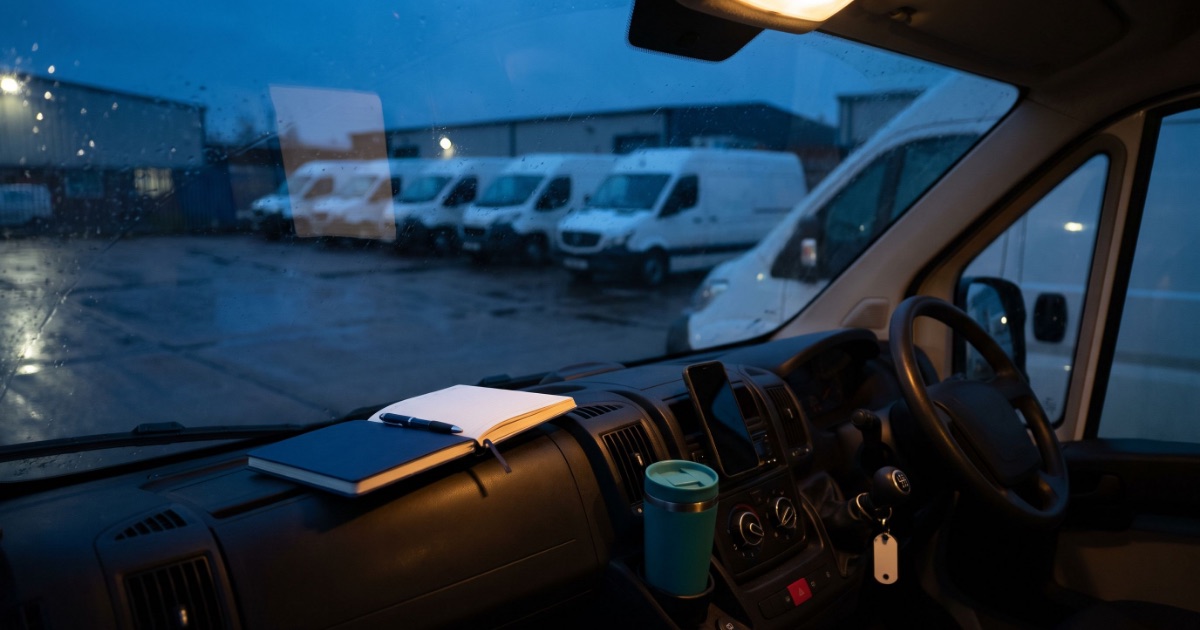
If you're self-employed and drive a car or van for work, you can claim 55p a mile for your first 10,000 business miles in 2026/27, and 25p a mile after that. It used to be 45p. The government announced the rise on 21 May 2026 and backdated it to 6 April, so it covers the whole tax year. That's the first change to the rate since 2011. But the 55p is only as good as your mileage log, and under Making Tax Digital that log has to keep up with you every quarter, not get pieced together in January.
What the extra 10p is worth
Take a courier who does 8,000 business miles this year. At 45p that was a £3,600 expense. At 55p it's £4,400. That's £800 more off your profit, so less tax and less Class 4 National Insurance. It's not money HMRC pays you, it just lowers the profit you pay tax on.
Above 10,000 miles the rate stays at 25p a mile. Motorbikes have their own rate of 24p a mile.
What does the 55p cover?
Pretty much everything about running the vehicle. Fuel, insurance, servicing, repairs, tyres, the MOT, road tax, and the van slowly losing its value. So if you use the mileage rate, you can't also claim the Shell receipts or the garage bill for that vehicle. That's the bit people get wrong most often. They claim the miles and then put the fuel through as well.
What you can add on top is the cost of a particular journey. Parking at a customer's site, a toll, the Dartford Crossing. Keep the receipt or the app record. Parking fines never count.
Two more rules worth knowing before you choose:
- You can't use the mileage rate on a vehicle you've already claimed capital allowances on.
- Once you've used the mileage rate for a vehicle, you stay on it for as long as that vehicle is in the business. You can't switch back and forth year to year. A new van is a fresh choice.
For a lot of drivers in an older, paid-off van, 55p a mile beats actual costs easily. For someone in a new van on finance doing short local drops, actual costs can come out ahead. We'd rather work that out with you before you pick, because you're stuck with it after.
What should go in your mileage log?
Five things for every business journey:
- the date
- where you started
- where you went
- why (the job, the drop, the customer)
- the miles
Something like "12 June, depot to Avonmouth, collect pallet for the Clifton job, 18 miles". A notes app on your phone is fine, so is a mileage app, so is the logbook in the door pocket. What matters is that you write it the same day, not that it looks nice.
Keep personal driving out of it. Driving from home to your regular depot or yard is commuting and doesn't count. Driving between jobs, or from the depot out to drops, does. Going from home straight to a one-off customer site can count too, but don't assume every mile from your front door is business.
Why can't I just add the miles up at the end of the year?
Because MTD doesn't wait for the end of the year anymore. Every quarterly update sends HMRC your income and expenses so far, and your mileage claim is one of those expenses. If you guess a round number in November and work out the real one in January, your updates and your final figures won't match, and you'll be explaining the gap.
And honestly, nobody remembers where they drove on a wet Tuesday in July. Rebuilding six months of trips from memory means you either miss miles you could have claimed or count some you can't back up. Neither is good if HMRC ever asks to see the log.
If you're one of our clients, send us your miles at the end of each quarter, along with the rest. A WhatsApp photo of the logbook page does the job. If you're not and you'd like help deciding between the mileage rate and actual costs, have a look at what we do for drivers or get in touch. There's more on the quarterly side on our Making Tax Digital page.
Sources: HMRC, Simplified expenses if you're self-employed: vehicles, Increase to AMAPs and self-employed simplified mileage rates, Expenses if you're self-employed: travel and Send quarterly updates. Correct as at November 2026.